Fish Scale Pattern Pocket Reading Pillow Review
As an embroidery designer who has spent years digitizing files and consulting with small business owners, I approach every new machine embroidery design with a critical eye. It is not just about whether a pattern looks pretty on a screen; it is about how it performs in the real world of commercial production. Today, I am reviewing the Fish Scale Pattern Pocket Reading Pillow, a design that initially caught my attention for its decorative potential but requires careful evaluation for broader business applications.
The product description highlights this as a beautiful embroidery design suitable for pocket reading pillows, outfits, or gifts. While the primary marketing angle focuses on home decor and personal gifting, my job is to determine if this asset holds up under the scrutiny of branded merchandise, staff uniforms, and high-volume commercial embroidery projects. Let us dive into how this piece fits into the Shapes category and whether it deserves a spot in your digital library.
First Impressions: Visual Personality and Brand Fit
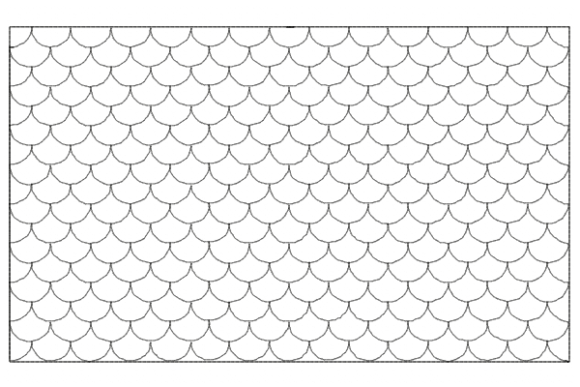
When I first loaded the Fish Scale Pattern Pocket Reading Pillow into my editing software, the immediate impression was one of organic elegance. The fish scale motif is a classic texture that bridges the gap between rustic charm and modern minimalism. For a boutique owner or a handmade brand, this visual language speaks volumes. It feels friendly yet sophisticated, avoiding the overly cartoonish vibe that plagues many low-quality digital embroidery file purchases.
This design does not scream for attention with bold, aggressive lines. Instead, it offers a subtle, textured backdrop that can elevate a handmade product without overpowering it. For businesses in the wellness, literary, or artisanal sectors, this aesthetic aligns perfectly with a brand identity centered on comfort, creativity, and care. However, for industrial or high-energy brands, this might feel too soft. Understanding this visual personality is crucial before committing to bulk production.
Real-World Business Applications Beyond the Pillow
While the title suggests use for a reading pillow, limiting this design to home decor would be a missed opportunity for savvy entrepreneurs. I evaluated how this pattern performs across various small business merch categories. Here is where I see genuine potential:
- Embroidered Patches: The repetitive nature of the scale pattern makes it an excellent candidate for iron-on or sew-on patches. These can be sold as standalone accessories or used to upgrade plain denim jackets and tote bags.
- Apron Embroidery: For bakeries, florists, or coffee shops, this design works beautifully as a chest accent on staff aprons. It adds a touch of professionalism and visual interest without being distracting during customer interactions.
- Tote Bag Design: A large-scale version of this pattern could serve as an all-over print effect on canvas totes. It transforms a basic bag into a statement piece, increasing the perceived value of the finished product.
- Cap Embroidery: Placed on the side panel or the back strap of a cap, this pattern offers a unique alternative to standard logos. It appeals to customers looking for custom apparel that feels curated rather than mass-produced.
By expanding the use case beyond the initial description, you can create a cohesive line of design assets that reinforce your brand across multiple touchpoints. Whether it is a gift with purchase or a premium add-on, versatility is key to maximizing ROI on any embroidery file.
Technical Considerations for Production Quality
Beauty in design means nothing if the stitch-out fails. As a designer, I must warn you about the technical challenges associated with textured patterns like fish scales. The success of this embroidery file depends heavily on execution. Here are the critical factors you must address before running a production batch:
Stitch Density and Fabric Texture
Scale patterns often rely on overlapping shapes to create depth. If the stitch density is too high, you risk puckering the fabric, especially on lighter materials like cotton or linen. Conversely, if the density is too low, the fabric may show through, breaking the illusion of the scale texture. I strongly advise testing this design on the exact fabric texture you intend to use. What works on a sturdy canvas pillow may fail miserably on a silky blouse.
Stabilizer Selection
Never skip the stabilizer. For a design with this level of detail, a cut-away stabilizer is often safer than tear-away, particularly if the item will undergo frequent washing. This ensures the stitches remain stable and the shape does not distort over time. For caps or curved surfaces, the right stabilizer is non-negotiable to prevent shifting during the hoop process.
Thread Colors and Contrast
The impact of the Fish Scale Pattern Pocket Reading Pillow changes dramatically with thread choice. Monochromatic schemes (e.g., navy thread on navy fabric) create a subtle, premium look ideal for corporate uniforms. High-contrast schemes (e.g., gold thread on black fabric) make the design pop, suitable for event merch or standout retail items. Always create a printable mockup or run a physical test to confirm that your chosen thread colors provide the desired visual effect.
Strategic Placement and Brand Identity
Where you place this design matters as much as the design itself. In the context of brand identity, consistency is king. If you use this pattern on your packaging, it should echo in your apron embroidery or website graphics. This repetition builds recognition and trust. Customers begin to associate that specific textured look with your quality and style.
However, be cautious with placement on small items. On a tiny patch or a child’s garment, the intricate details of the scales might blur together. In such cases, consider simplifying the design or increasing the size. For Etsy branding, where photos are everything, ensure the design is photographed in good light to showcase the texture. A poorly lit photo can make a detailed embroidery look like a muddy blob, hurting your conversion rates.
Practical Designer Notes for Buyers
Before you purchase and produce, follow this checklist to ensure professional results:
- Test in Black and White: Convert your mockup to grayscale to check for contrast issues. If the design loses definition in black and white, it may lack clarity in low-light settings.
- Check Hoop Size Compatibility: The product description does not specify exact dimensions. Verify the hoop size requirements against your machine’s capabilities. You do not want to buy a file that requires a 5x7 hoop if you only own a 4x4 machine.
- Review Commercial Licensing: Always confirm the license terms. Can you use this for unlimited physical sales? Are there restrictions on digital redistribution? Protect your business by ensuring you have the right to use this in commercial embroidery projects.
- Inspect Spacing and Jump Stitches: Open the file in your software to check for unnecessary jump stitches or poor pathing. Clean files save time and thread, directly impacting your profit margin.
- Create Client Mockups: If you are doing custom work, show the client a realistic preview. Manage expectations regarding how the texture will appear on their specific garment.
In conclusion, the Fish Scale Pattern Pocket Reading Pillow is a versatile and aesthetically pleasing addition to the Embroidery category. While it shines in home decor, its true value for small business owners lies in its adaptability for branded merchandise. By paying attention to technical details like stabilizer choice, stitch density, and strategic placement, you can transform this simple pattern into a powerful tool for enhancing your brand identity. Treat it not just as a design, but as a component of your broader visual strategy, and it will serve your business well.